
Impact of Supreme Court Tariff Decision
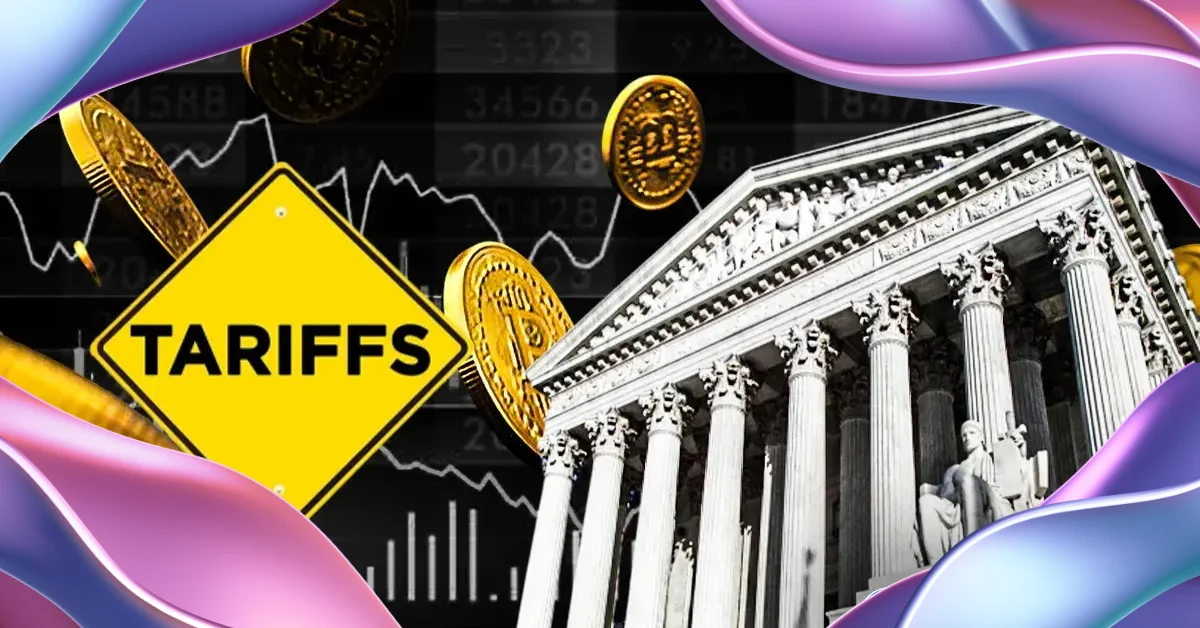
Recent developments in the legal and macroeconomic landscape have a profound impact on the cryptocurrency markets, particularly Bitcoin (BTC). One key event capturing investor attention is the pending tariff-related judgment by the U.S. Supreme Court. While seemingly centered on trade policy, this decision carries significant implications for liquidity, risk appetite, and ultimately, Bitcoin’s price trajectory. Understanding how the Supreme Court tariff decision might influence BTC price is crucial for traders, investors, and market analysts alike.
Context of the Supreme Court Tariff Decision and Market Sentiment
The U.S. Supreme Court’s deliberation on tariffs involves complex legal and economic considerations. Though primarily a trade dispute, the ruling’s eventual outcome could shape macroeconomic conditions, especially liquidity and fiscal restraint expectations. Market participants are closely monitoring this case because of its asymmetric macro consequences:
- Potential for tariff removal or relaxation: A ruling against tariffs could release over $600 billion in potential refunds, relaxing fiscal constraints and boosting liquidity expectations.
- Maintenance or tightening of tariffs: Conversely, upholding tariffs would reinforce trade restrictions, possibly constraining liquidity and raising market uncertainty.
This binary scenario directly affects risk assets, including Bitcoin, which often responds to macro liquidity conditions.
How Tariff Outcomes Influence Liquidity and Risk Assets
Scenario 1: Tariffs Declared Illegal – Liquidity Relief and Bullish Bitcoin Outlook
If the Supreme Court rules tariffs to be illegal or invalid, it is expected to have several macroeconomic effects:
- Liquidity expansion: Refunds and relaxation on trade restrictions increase overall liquidity in financial markets.
- Risk appetite boost: Investors tend to move capital into riskier assets, including cryptocurrencies, commodities, and equities.
- Bitcoin’s response: Historically, Bitcoin has exhibited positive price behavior during periods of expanding liquidity, as increased capital inflows boost demand. This could push BTC toward new highs, potentially reclaiming or surpassing key resistance levels around $100,000.
Scenario 2: Tariffs Upheld or Strengthened – Liquidity Tightening and Caution
Should the court affirm tariffs or impose stricter trade measures, the macro environment could become more cautious:
- Liquidity restraint: Continued or increasing trade restrictions limit capital flows, raising market caution.
- Risk-aversion behavior: Investors may retreat into safer assets, reducing demand for BTC.
- Bitcoin’s reaction: In such an environment, Bitcoin’s momentum could slow, and its price may face downward pressure or range-bound behavior, hindering attempts to sustain gains above $94,000 or $100,000.
Market Expectations Are Priced In, Not the Timing
Even though the Supreme Court has delayed issuing a final ruling, markets are already pricing in various probability scenarios. According to independent prediction markets, there is approximately a 67% chance that tariffs will be declared illegal, which would relax liquidity and boost risk assets. Therefore, Bitcoin’s price often reacts more to the perceived outcome’s probability rather than the official timing of the decision.
This probability-driven behavior ensures that Bitcoin remains a structurally responsive asset, with price movements reflecting macro risk sentiment and liquidity expectations.
Technical Indicators and Price Action Post-Decision Expectations
Recent technical analysis supports this view. Bitcoin recently broke out of a consolidation phase, reclaiming support at around $94,000, with bullish patterns like cup-and-handle formations indicating strong buyer control. Momentum indicators such as the Directional Movement Index (DMI) and Average Directional Index (ADX) have signaled robust bullish conditions, with the current target near $100,000. Continued momentum depends significantly on macro risk sentiment shaped by the Supreme Court’s ruling prospects.
Frequently Asked Questions (FAQs)
The ruling could influence liquidity conditions, risk sentiment, and capital allocation across markets. A relaxation of tariffs tends to boost liquidity and risk appetite, positively impacting assets like Bitcoin.
Uncertainty shifts focus toward macro structure and positioning rather than reactive headline moves. This makes Bitcoin’s price more sensitive to macro expectations and probability assessments.
Markets often price expected outcomes early based on probability assessments, which influence current positioning even before official decisions are announced.
Conclusion
The influence of the U.S. Supreme Court’s tariff decision on Bitcoin’s price underscores the importance of macroeconomic and legal factors in shaping crypto market dynamics. As global liquidity conditions hang in the balance, Bitcoin remains a responsive asset, modulating its trajectory based on evolving macro-political expectations. Staying informed on these developments equips investors to better anticipate potential market movements and adjust their strategies accordingly.