
Russia’s Crypto Crackdown: Putin Signs Law Allowing Confiscation of Digital Assets
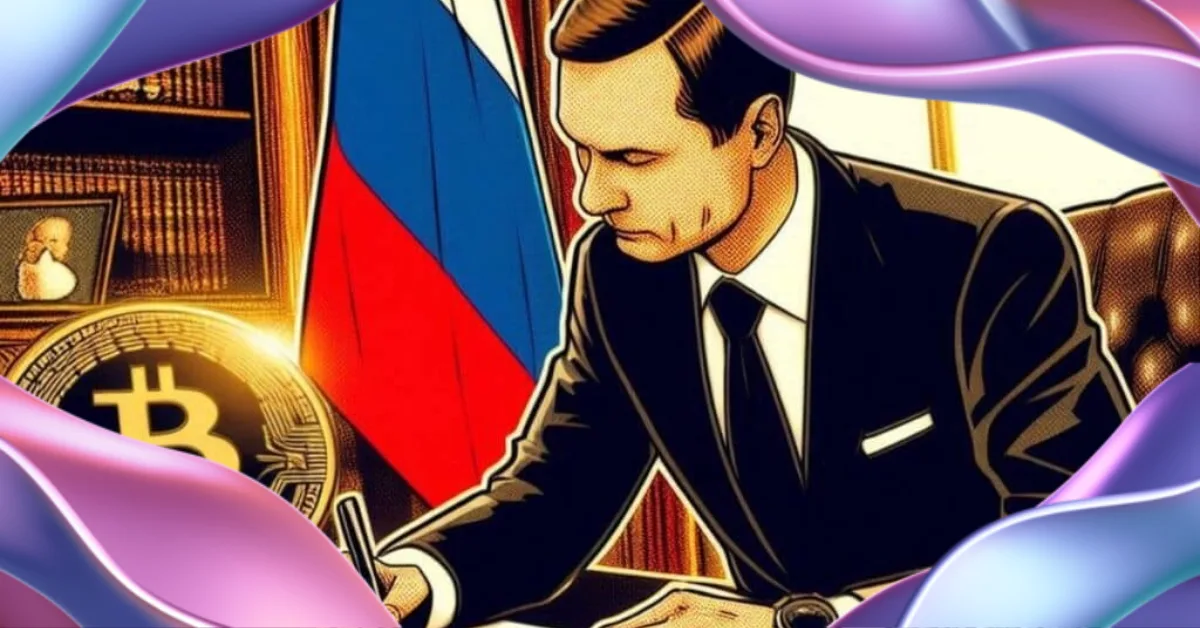
In a decisive move signaling tighter state control over the digital finance landscape, Russian President Vladimir Putin has signed a new law granting courts and law enforcement the authority to seize and confiscate cryptocurrencies, including major digital assets like Bitcoin and Ethereum. This legislation, part of a broader overhaul of Russia’s cryptocurrency regulations, reflects the government’s growing intent to regulate and monitor the fast-expanding crypto market, while addressing long-standing legal ambiguities surrounding digital assets.
Key Provisions of the Law
The newly enacted legislation introduces significant changes to Russian criminal and property law, providing clear guidelines on how digital assets are treated during criminal investigations. Its main provisions include:
Cryptocurrencies Classified as Intangible Property
For the first time, cryptocurrencies are explicitly recognized as a form of “intangible property” under Russian law. This legal classification is crucial because it allows courts to treat digital currencies in the same way as conventional property, such as cash, real estate, or vehicles, particularly in the context of seizures, fines, or criminal proceedings.
Legal Framework for Seizure and Confiscation
The law empowers courts to order the confiscation of cryptocurrencies linked to criminal investigations or convictions. Under this framework, authorities can:
- Freeze or seize crypto stored in wallets associated with suspects.
- Transfer seized assets to government-controlled wallets when technically possible.
- Confiscate hardware wallets, servers, and devices containing private keys.
Crucially, enforcement agencies must specify the type of cryptocurrency, the exact amount, and the wallet address or other identifying details when requesting confiscation, ensuring legal clarity and accountability.
International Cooperation
The law also provides legal grounds for collaboration with foreign crypto exchanges. Russian authorities can request exchanges abroad to freeze or surrender assets linked to Russian individuals or entities under investigation. This provision signals Moscow’s intent to monitor not just domestic crypto activity but also cross-border holdings.
Licensing and Regulatory Tightening
Alongside confiscation powers, Russia is tightening regulations on digital asset operations. Key measures include:
- Imposing annual crypto purchase limits for retail investors, set at approximately 300,000 rubles (~$4,000).
- Requiring domestic licensing for crypto exchanges and brokers, with penalties, including platform blocking, for non-compliance.
- Maintaining the ban on using cryptocurrencies as legal tender for domestic transactions, while allowing certain cross-border trade settlements.
Why This Law Matters
While the legislation primarily addresses criminal enforcement, it has far-reaching implications for the Russian crypto ecosystem, investors, and the state’s broader economic strategy.
Closing Legal Gaps
Before this law, Russian authorities faced challenges in seizing crypto assets. While courts sometimes treated digital coins as property in civil disputes, there were no explicit mechanisms for criminal confiscation. The new law removes this ambiguity, granting law enforcement definitive authority.
Addressing Security and Crime Concerns
Russian officials have long cited cryptocurrencies as tools for money laundering, fraud, and sanctions evasion. By regulating and enabling the confiscation of illicit digital assets, the state aims to curb illegal activity while increasing accountability for crypto holders.
Capturing Domestic Economic Value
Russia’s crypto market is substantial, with billions of dollars in annual transaction volume, much of it moving through foreign platforms. Analysts argue that this law also seeks to redirect crypto activity into regulated domestic channels, reducing capital outflows and ensuring that a portion of economic value remains within the country.
Russia’s Crypto Policy in Context
Understanding this law requires a look at Russia’s evolving approach to digital assets.
Early Legal Ambiguity
For years, Russian law struggled to classify and regulate cryptocurrencies. Digital assets existed in a gray area, complicating enforcement and leaving authorities with limited powers to act against illicit transactions.
Mining Legalization and Restricted Usage
Russia legalized crypto mining under regulated conditions while banning cryptocurrencies as legal tender for domestic payments. The government tolerated crypto investments but restricted their integration into the mainstream financial system.
Towards Comprehensive Regulation
Since late 2025, Russia has actively pursued broader crypto regulations. The confiscation law is part of this movement, establishing a legal foundation for criminal enforcement, investor limits, and licensing frameworks. By mid-2026, the state aims to implement a full regulatory system encompassing all aspects of the crypto market.
Potential Consequences and Criticisms
While the law represents a regulatory milestone, it also raises concerns regarding enforcement, market stability, and civil liberties.
Challenges in Enforcement
Cryptocurrencies are inherently pseudonymous, making ownership verification and tracking difficult. Confiscating assets from decentralized wallets may be technically challenging, and reliance on foreign exchanges for cooperation could face legal and operational hurdles.
Impact on Investor Confidence
The law could erode trust among crypto investors. Fear of state seizure might push individuals and businesses toward offshore or unregulated platforms, potentially reducing activity on domestic exchanges.
Balancing Crime Control and Rights
Civil liberties advocates warn of potential overreach. Broad confiscation powers may risk violating property rights if procedural safeguards are inadequate. Defining legitimate versus illicit crypto activity remains a gray area, which could lead to disputes or misapplication.
Economic Trade-offs
Redirecting crypto trading into regulated platforms may strengthen state oversight and domestic financial markets. However, heavy-handed regulation could encourage shadow-market activity, with economic benefits lost to unregulated international networks.
Conclusion: A Pivotal Moment in Russian Crypto Regulation
The confiscation law signed by President Vladimir Putin represents a turning point in Russia’s handling of digital assets. By formally recognizing cryptocurrencies as property and enabling legal seizure, Russia has clarified its stance on crypto ownership and enforcement.
The law reflects a delicate balance: protecting the state’s interests, curbing crime, and maintaining economic oversight, while navigating the technical and legal complexities of a decentralized financial system. How effectively it will be implemented – and its impact on both domestic and global crypto markets – remains to be seen.
What is certain is that Russia’s approach to cryptocurrencies is evolving rapidly, with profound implications for investors, regulators, and the global digital asset landscape.