
CLARITY Act Back On Track: Armstrong and Moreno Signal April Victory for Crypto Bill
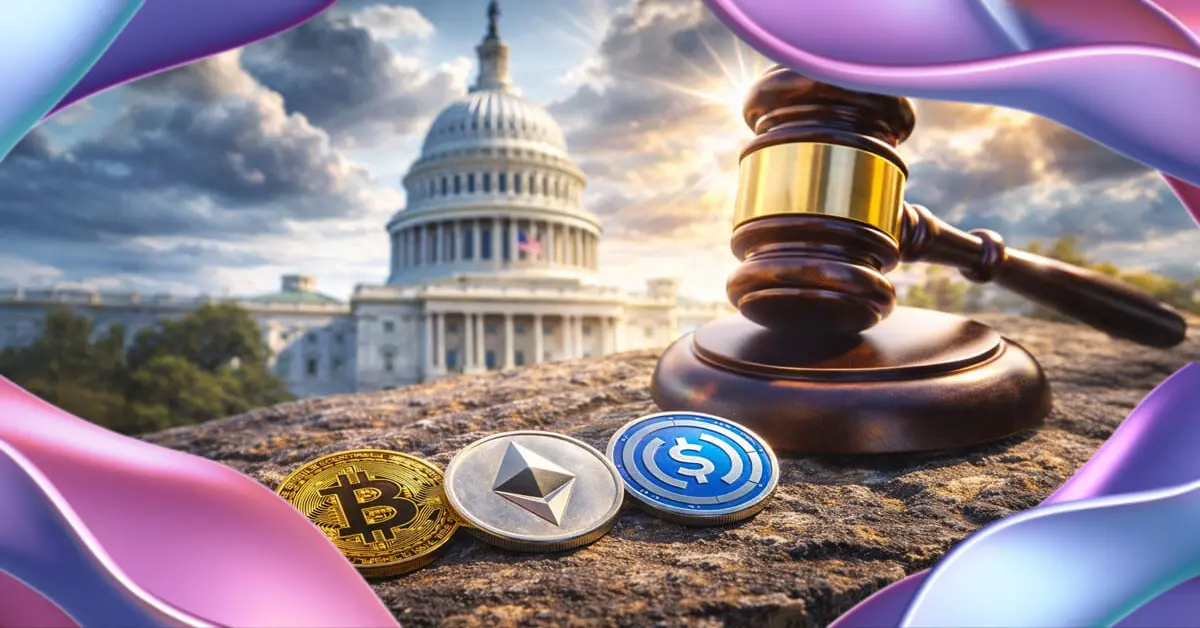
Washington, D.C. – Momentum is rapidly building behind the Digital Asset Market Structure CLARITY Act, aimed at delivering the United States’ first comprehensive regulatory framework for the cryptocurrency industry. After months of uncertainty and intense debate, crypto executives and lawmakers now believe the bill could be passed by April 2026, potentially ushering in a new era of regulatory certainty for digital assets.
Renewed optimism was evident this week at the World Liberty Financial Forum in Mar-a-Lago, Florida, when Coinbase CEO Brian Armstrong and U.S. Senator Bernie Moreno appeared together to discuss the future of the legislation.
“I believe we have a path forward to achieve a win-win outcome that benefits the crypto industry, traditional banks, and American consumers,” Armstrong said on stage alongside Moreno, referencing the bill’s renewed trajectory after early setbacks.
What the CLARITY Act Seeks to Achieve
The CLARITY Act, or Digital Asset Market Structure Clarity Act, is a legislative effort designed to create a clear, unified regulatory framework for digital assets in the United States. The bill addresses unresolved questions around which federal agencies should regulate certain crypto products, how stablecoins and decentralized finance will be governed, and rules governing market structure and token offerings.
The bill passed the House of Representatives in 2025 but stalled in the Senate after key disagreements emerged between crypto advocates, traditional financial institutions, and regulators.
From Roadblocks to Renewed Progress
The CLARITY Act encountered a roadblock earlier this year when Coinbase withdrew its support over concerns that key provisions would ban interest-bearing stablecoins, potentially restricting one of Coinbase’s revenue streams, shift regulatory authority toward the Securities and Exchange Commission at the expense of the Commodity Futures Trading Commission, restrict decentralized finance activities, and expand conventional securities compliance requirements to blockchain innovation.
Coinbase’s withdrawal initially threw the bill’s prospects into doubt, delaying Senate committee action and frustrating both legislators and industry stakeholders. At the time, Armstrong stated bluntly that Coinbase would rather have no bill than a bad bill, a position that highlighted deep industry divisions over the bill’s design.
Negotiations Gain Momentum
Despite early turbulence, negotiations appear to have taken a constructive turn in recent weeks. At the World Liberty Financial Forum, both Armstrong and Senator Moreno projected that progress had been made on thorny issues, including stablecoin yields and the balance of regulatory authority.
Senator Moreno told reporters he hopes the bill will be sent to the President’s desk by April. Policymakers have been holding regular talks with industry representatives, bank executives, and federal regulators in an effort to iron out differences and reach consensus.
“Stablecoin rewards and competitive balance with traditional banks are at the heart of this,” Moreno said during an interview, adding that the latest discussions have yielded real momentum.
Prediction Markets Reflect Optimism
The renewed progress has also been reflected in prediction markets. On Polymarket, a platform where traders can bet on legislative outcomes, the implied odds of the CLARITY Act passing in 2026 briefly surged to 90 percent following Armstrong and Moreno’s comments.
While the odds later retreated slightly, the increase signals growing confidence among informed market participants that the bill now has a realistic path to passage. Additionally, Ripple CEO Brad Garlinghouse publicly said he views the chances of passage as very high, reinforcing industry belief that the bill can be concluded by April if key players stay engaged.
The Stablecoin Debate
A central point of contention has been how the bill treats stablecoins, particularly whether issuers should be allowed to pay yields or rewards to users. Traditional banks argue that such yields could siphon deposits away from insured banking accounts, while crypto advocates maintain that yield-bearing stablecoins are essential for innovation and competitiveness.
Armstrong noted that the early draft’s prohibition on interest-bearing stablecoins was a major sticking point. He now suggests that negotiators are making progress toward a compromise that addresses both financial stability concerns and crypto market needs.
“We don’t want a bill that undermines American innovation,” Armstrong said. “We want a framework that allows U.S. leadership in the global digital asset economy.”
What Happens Next
With the legislative calendar ticking down, all eyes are on the Senate Banking Committee, where the bill must be marked up and approved before it can go to the full Senate for a vote.
If the committee can adopt a revised version and secure broad bipartisan support, the bill could reach the House floor and then be sent to the White House, potentially by April 2026, as Armstrong and Moreno project.
Industry experts caution that nothing is guaranteed. Unresolved technical language or renewed opposition from vested interests could derail progress at the final hurdle. But as of now, the tone in Washington and Silicon Valley is noticeably more optimistic than it was just weeks ago.
Why the CLARITY Act Matters
For investors and industry participants, the CLARITY Act represents more than just legislation. It could be the foundation for how digital assets are treated in the United States for years to come.
A clear regulatory framework could encourage institutional investment, reduce legal uncertainty for exchanges and decentralized finance platforms, clarify how customer assets are protected, and define the roles of federal financial regulators.
Supporters argue that such clarity could strengthen U.S. competitiveness against other global jurisdictions, particularly as countries like China advance government-backed digital currencies and other blockchain initiatives. Critics, meanwhile, worry that overly restrictive rules could stifle innovation, entrench incumbent players, or prioritize traditional finance at the expense of decentralized systems.
Conclusion
As the April deadline approaches, the CLARITY Act stands at a crossroads. After months of setbacks and public disagreement, a growing coalition of lawmakers and industry leaders believe that regulatory clarity, long promised but never realized, may finally be within grasp.
Whether this legislative effort results in a transformational framework or a compromised middle ground remains to be seen. One thing is clear: the U.S. crypto industry is closer to regulatory certainty now than it has been at any point in the past few years, and April 2026 could mark the moment that clarity becomes law.